
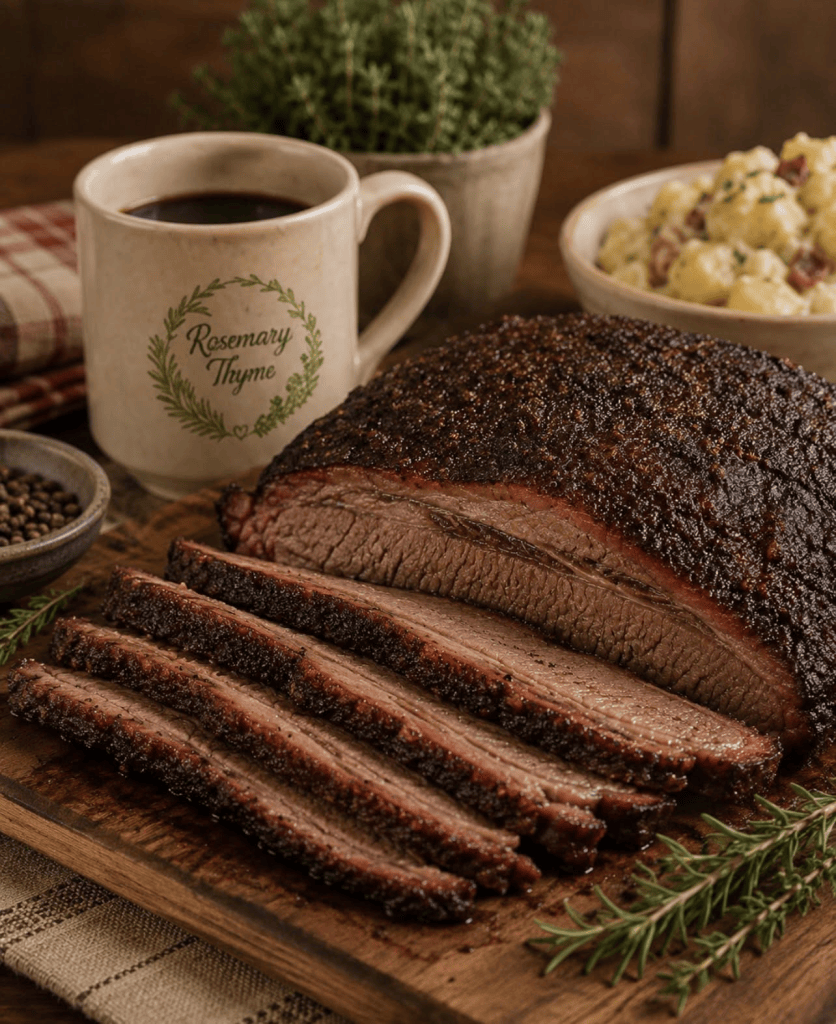
Rosmary Thyme Slow-Smoked Brisket on the Porch Smoker
There is something about the smell of a smoker going on a summer afternoon that instantly feels like home to me. This brisket is slow-smoked the old-fashioned way — fire on one side, meat resting slowly in the gentle smoke on the other. It’s simple, peaceful cooking that takes time, patience, and a little faith in the process.
This is the kind of meal meant for family gatherings, long conversations, summer evenings on the porch, and paper plates filled beside bowls of homemade potato salad.
─────────────────────

• 1 whole brisket, about 5–7 pounds
• 2 tbsp avocado oil or yellow mustard (binder)

• 2 tbsp coarse black pepper
• 1 tbsp garlic powder
• 1 tbsp onion powder
• 2 tsp smoked paprika
• 2 tsp Diamond Crystal kosher salt
(or 1 tsp table salt)
• 1 tsp rosemary thyme herb blend
• Optional: 1 tsp brown sugar for a slight caramelized bark
For Wrapping:
• 1/2 cup low-sodium beef broth
─────────────────────


─────────────────────

Brisket is not a fast meal — and that is part of its beauty. The tenderness comes slowly as the connective tissue melts down over time. Low heat and patience are the secret.

If this is your first brisket, don’t panic when the temperature suddenly seems to stop moving for hours. Almost everyone who smokes brisket experiences that moment of standing beside the smoker wondering:
“Did I ruin it?”
“Why is this thing stuck?”
“Is dinner ever going to happen?”


This is called “the stall,” and it is completely normal. Usually around 160–170°F, the brisket may appear to stop rising in temperature for quite some time as moisture evaporates from the meat.
The first time I made brisket, I had no idea this could happen — so now I always start much earlier and plan ahead for the stall instead of stressing over it.
This is also why experienced brisket cooks usually think:
“How early can I start this?”
instead of:
“How late can I get away with starting it?”

At the stall stage, you can:
• continue smoking patiently through it, or
• wrap the brisket in butcher paper or foil with a splash of broth to help push through the stall while keeping the meat moist and tender.
And the good news? If a brisket finishes early, that’s perfectly fine. A wrapped brisket can rest beautifully and often becomes even more tender while resting.
Low heat, patience, and time are the real secret ingredients to great brisket.


─────────────────────

Perfect with:
• Family German-Style Potato Salad
• Creamy coleslaw
• Grilled corn
• Cast-iron cornbread
• Garden tomatoes
• Sweet iced tea or Garden Waters
Serves about 8–10.
─────────────────────

Some of the best meals are the ones that ask us to slow down a little. The smoker quietly going on the porch, family gathering in and out of the kitchen, summer air moving through the screens — those moments become part of the recipe too.
─────────────────────


Discover more from Rosemary Thyme
Subscribe to get the latest posts sent to your email.
