From This Year’s Garden to Next Year’s Harvest
🌿🍅 ROSEMARYTHYME GARDEN 🍅🌿
From This Year’s Garden to Next Year’s Harvest
Saving Heirloom Vegetable Seeds for Another Growing Season 🌱
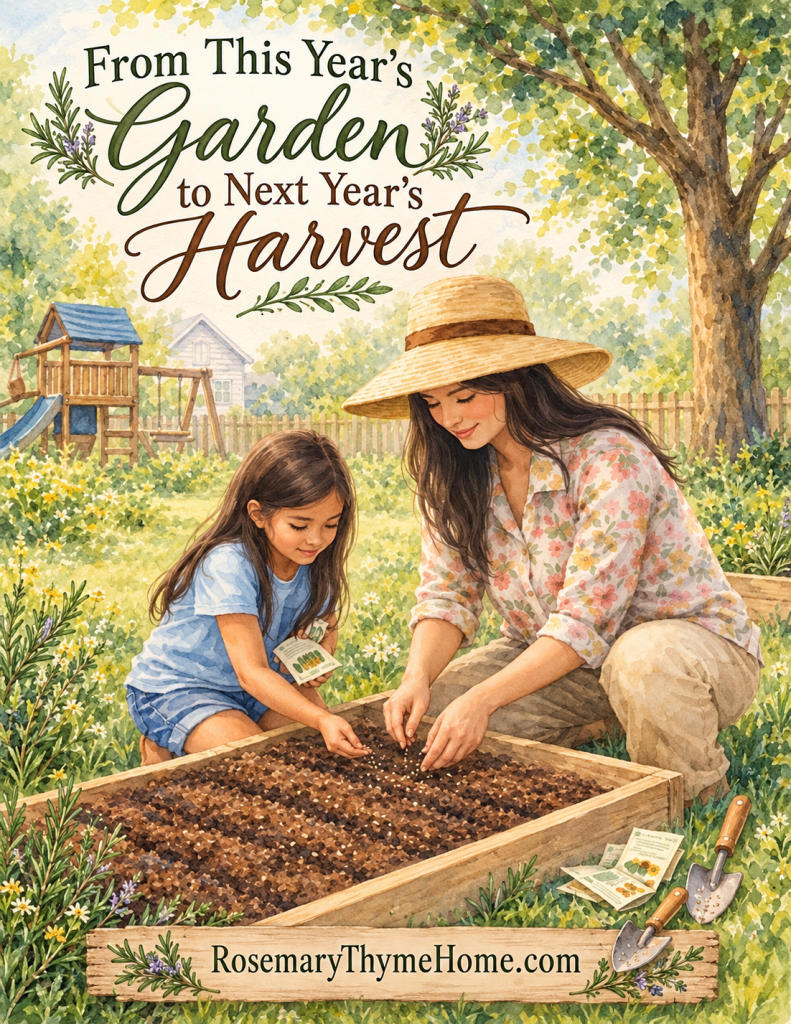
Some of my favorite memories are of teaching my daughter how to plant and grow when she was very little. She took to gardening right away, and it was such a joy to watch her love for growing things take root.
Today, she has carried that love into adulthood and into her own home. She is a fifth-generation farmer and home gardener—and a budding urban homesteader. I am so proud of her and the beautiful life she is growing. 💛
I’ve been wanting to learn more myself about heirloom seeds: how to harvest them, dry them, and plant them again the following year. After growing my Baxter tomatoes this season, I thought this would be a wonderful thing to learn and share with her.
This post is dedicated to my daughter, with love. May your garden always bring you joy, nourishment, and a little connection to the generations who planted before you. 🌿💕
────────────────────────
🌱 Why Save Heirloom Seeds?
Saving seeds is a practical way to carry a favorite vegetable from one growing season into the next. It can help stretch the gardening budget, preserve varieties we love, and give us seeds to share with family and friends.
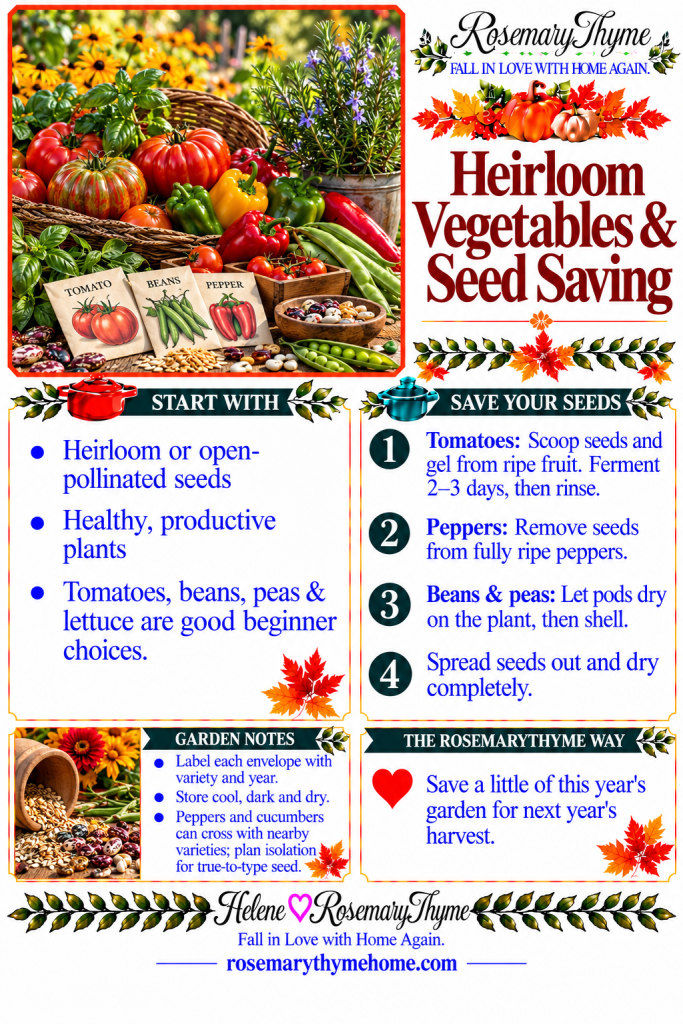
Look for seeds or plants labeled heirloom or open-pollinated. With proper pollination, their seeds can grow plants similar to the parent plant.
Seeds from hybrid plants, often marked F1, can still grow, but their offspring may not have the same qualities as the original plant.
Start with healthy, productive plants and undamaged fruit. If you still have your seed packet or plant tag, check it to see whether your variety is heirloom or open-pollinated.
────────────────────────
🍅 Saving Tomato Seeds
Tomatoes are a lovely place to begin. Their seeds have a gel coating, so a short fermentation helps clean them.
- Choose a fully ripe tomato from a healthy plant.
- Cut it open and scoop the seeds and gel into a small jar. Add a little water if needed.
- Loosely cover the jar and let it sit at room temperature for about 2–3 days, stirring daily.
- Add water, pour off the pulp and debris, and rinse the seeds in a fine-mesh strainer.
- Spread the seeds in a single layer on a plate or coffee filter. Let them dry completely in an airy place out of direct sunlight.
- Place them in a labeled envelope and store them in a cool, dark, dry place.
I hope to try this with my Baxter tomatoes after checking that the variety I grew is open-pollinated. 🍅💛
────────────────────────
🌶️ Saving Pepper Seeds
- Leave a pepper on a healthy plant until it reaches its fully ripe color.
- Cut it open and remove the seeds.
- Spread the seeds out in a single layer and let them dry completely.
- Label and store them for next year.
🌿 Tip: Pepper varieties can cross-pollinate, so protect or isolate blossoms if you want seeds that reliably produce the same variety. Wear gloves when handling hot peppers.
────────────────────────
🥒 Saving Cucumber Seeds
Cucumbers for seed saving need to stay on the vine much longer than cucumbers picked for eating.
- Leave a healthy cucumber on the vine until it is large and fully mature—often yellow and soft.
- Scoop the seeds and pulp into a jar and let them ferment for about 2–3 days.
- Rinse the seeds, spread them out, and let them dry completely.
- Label and store them for next spring.
🌿 Tip: Bees can carry pollen between cucumber varieties, including those growing in a neighbor’s garden. Isolation or hand-pollination and covering blossoms can help preserve the variety.
────────────────────────
🫘 Saving Beans, Peas & Lettuce
Beans and peas: Leave a few pods on the plant until they turn brown and dry. Shell the seeds, finish drying them if needed, and store them in a labeled envelope.
Lettuce: Allow a few plants to flower and form seed heads. Once the heads are dry and fluffy, collect them and separate the seeds from the plant material.
Beans, peas, lettuce, and tomatoes are all good choices for beginning seed savers. 🌱
────────────────────────
🌿 Heirloom Varieties to Explore
When planning next year’s garden, look for these varieties and check the packet to make sure the seeds are labeled heirloom or open-pollinated:
🍅 Tomatoes: Brandywine, Cherokee Purple, Amish Paste, Mortgage Lifter
🌶️ Peppers: California Wonder, Jimmy Nardello, Fish Pepper
🥒 Cucumbers: Lemon, Boston Pickling
🫘 Beans: Kentucky Wonder, Rattlesnake
🫛 Peas: Lincoln, Little Marvel
🥬 Lettuce: Black Seeded Simpson, Grand Rapids
🎃 Squash: Black Beauty zucchini, Waltham Butternut, Connecticut Field pumpkin
Squash and pumpkins are wonderful to grow, but saving seeds that stay true to the variety takes a little more planning because varieties of the same species can cross-pollinate.
────────────────────────
🫙 A Few Seed-Storage Tips
• Make sure seeds are completely dry before storing.
• Place each variety in its own paper envelope.
• Write the vegetable, variety, and year on the envelope.
• Keep the envelopes in a sealed container in a cool, dark, dry place.
• Before planting, test a few seeds between damp paper towels to see how many sprout.
────────────────────────
🌿 A Little RosemaryThyme
A garden gives us more than a harvest. It gives us memories, lessons, and something to share with the people we love.
Sometimes a seed planted with a little girl grows into more than a vegetable. It grows into a lifelong love of the garden—and a tradition she can carry into her own home. 🌱💕
From this year’s garden to next year’s harvest, may we keep growing and sharing together.
Helene 😊
Rosemary Thyme 🌿
Fall In Love With Home Again 💛🏡
RosemaryThymeHome.com