Kitchen History: Mise en Place 🌿
Long before I knew the French phrase mise en place, I knew what it looked like.
My mother, aunts, and grandmother were methodical cooks. They prepared ingredients in the order they would need them, set out the right pans and tools, and washed dishes and bowls as they went. Their kitchens stayed ready for the next step. I learned by watching them that a little preparation could make cooking feel peaceful.
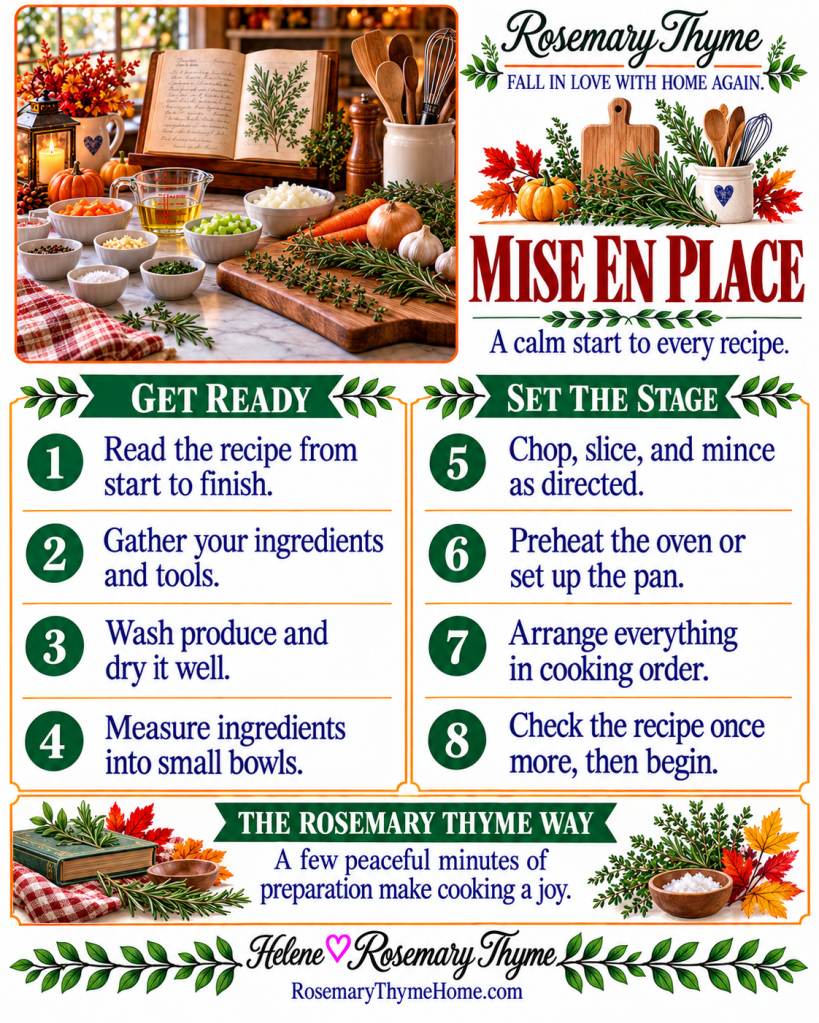
It wasn’t until I married Dennis, a pastry chef, that I learned this familiar way of working had a name: mise en place—a French culinary phrase meaning “putting in place.” In professional kitchens, it describes having the ingredients, equipment, and work area ready before cooking begins. (vitrinelinguistique.oqlf.gouv.qc.ca, escoffier.edu)
The phrase belongs to the language of French cooking, but the practice has lived in family kitchens for generations. My mother, aunts, and grandmother taught it to me without ever calling it by name. Dennis simply gave me the words for something I already loved.
That is the Rosemary Thyme way: make a little room, gather what you need, and enjoy the cooking. 💛
Helene 😊
Rosemary Thyme 🌿
Fall In Love With Home Again 💛🏡
RosemaryThymeHome.com
